

After Bibi
"The day Benjamin Netanyahu leaves office will reveal whether the world’s argument was ever really about Benjamin Netanyahu."
By Rabbi Steven Abraham
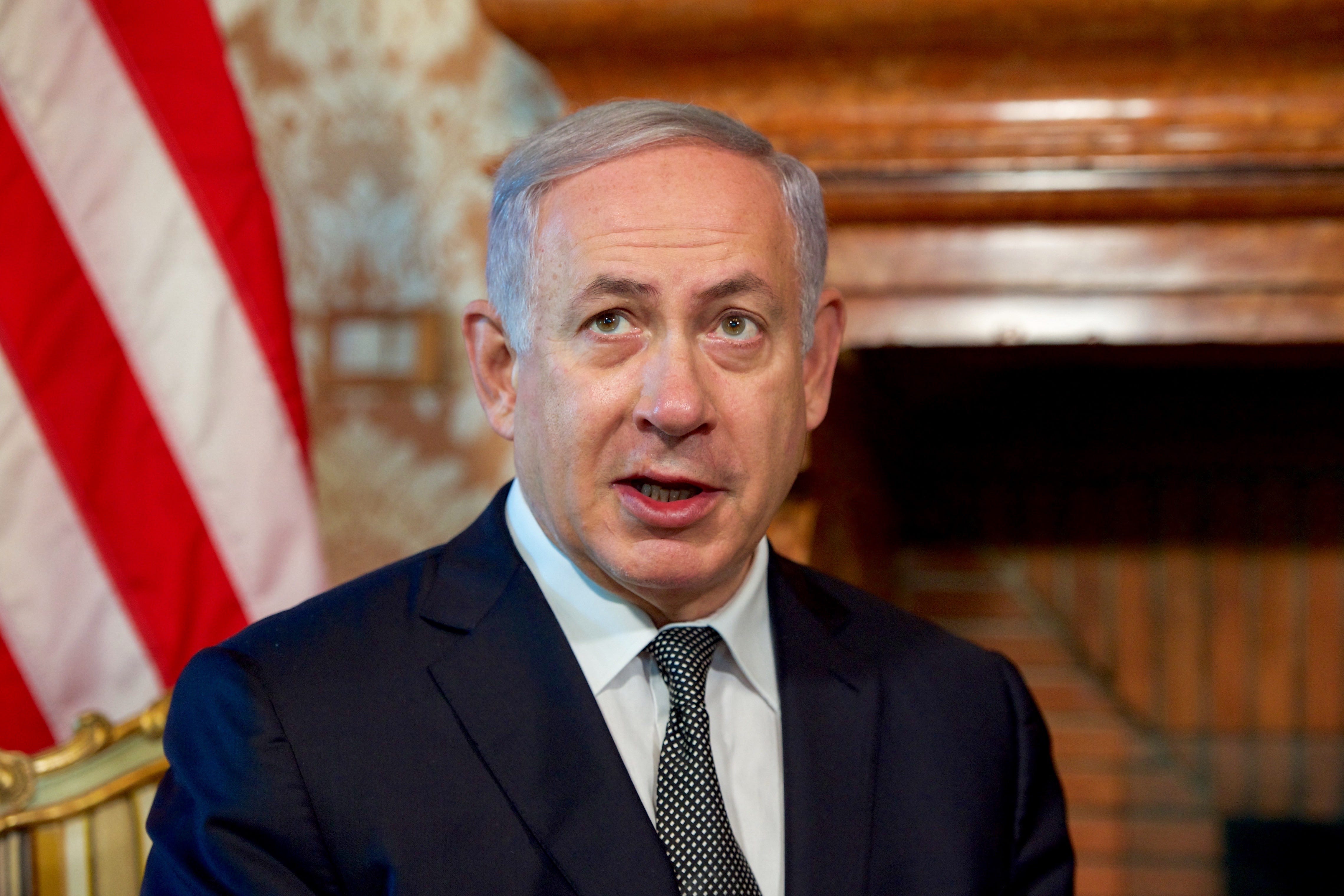
There will come a day when Benjamin Netanyahu is no longer prime minister of Israel.
He will retire. He will lose an election. Or Israeli democracy will do what democracy eventually does to every leader: it will move on.
I have thought about that day more than I expected to.
A few weeks ago, after Shabbat morning services, a congregant I have known for nearly fifteen years stopped me outside my study. He is not someone who follows politics obsessively. He rarely brings up current events. He simply asked me, “Rabbi, do you think things will get better once Netanyahu is gone?”
I answered the only way I could.
“I don’t know.”
But I have been thinking about that conversation ever since. And the more I think about it, the more I realize the better answer is this:
I don’t know what will happen.
But I do know what to watch for.
Because the day Benjamin Netanyahu leaves office will tell us something important—not only about Israel, but about everyone who claims to care about Israel.
If the world’s argument has truly been with Benjamin Netanyahu, then the conversation should change once he is gone.
If it doesn’t, then perhaps the argument was never really about Benjamin Netanyahu at all.
Judaism has never been afraid to criticize its leaders.
Nathan confronted King David.
Elijah challenged King Ahab.
The prophets did not remain silent when kings abused their power or lost their moral compass. Speaking truth to power is not foreign to Judaism. It is one of Judaism’s oldest traditions.
But the prophets also understood something that our public conversation often forgets.
Nathan condemned David’s actions.
He did not deny the legitimacy of David’s kingdom.
The prophets criticized kings without rejecting the nation those kings led.
That distinction matters.
There is plenty about Benjamin Netanyahu that deserves criticism.
I have offered some of it myself, both from the bimah and in writing.
His judicial overhaul deeply divided Israeli society.
Some of the partners he brought into government hold views about Arabs, women, Palestinians, and non-Orthodox Jews that I find morally and religiously troubling.
Like every leader, especially one leading a nation through war, his decisions deserve careful scrutiny.
Love of Israel does not require silence.
In fact, love sometimes requires criticism.
But there is another kind of criticism that often hides behind the first.
And we may not recognize it until Netanyahu is gone.
Perhaps Israel’s next prime minister will be Naftali Bennett.
Perhaps Gadi Eisenkot.
Perhaps Benny Gantz.
Perhaps someone none of us is talking about today.
Different personalities.
Different politics.
Different styles of leadership.
The names will change.
The question is whether the accusations will.
Imagine a leader who speaks more softly than Netanyahu.
Imagine someone who rebuilds bridges with American Jews.
Imagine someone who is less confrontational, less polarizing, more willing to compromise.
Now imagine that the same words are used anyway.
Fascist.
Colonialist.
Apartheid.
Genocide.
Imagine that every military action is condemned before the facts are known.
Imagine that every Israeli government, regardless of who leads it, is declared uniquely illegitimate.
If that happens, then we will have learned something.
The problem was never only Benjamin Netanyahu.
Maimonides teaches that repentance is proven not by what we say but by what we do when the same situation comes around again.
Anyone can promise to change.
The real test comes later.
Will we choose differently when given the opportunity?
I think that teaching applies here as well.
When Netanyahu leaves office, the world will face its own moment of truth.
Will people judge Israel differently?
Will they extend to the next prime minister the same fairness they extend to other democratic leaders?
Or will they simply transfer all of today’s anger onto a new face?
The answer will tell us more than a thousand speeches.
There is a reason human beings like villains.
Villains make complicated stories simple.
The Israeli-Palestinian conflict is anything but simple.
It is painful.
It is tragic.
It is filled with competing truths.
Israel has legitimate security concerns.
Palestinians have experienced profound suffering.
Terrorism is evil.
War is devastating.
Holding all of those truths together is hard.
Finding one man to blame is much easier.
The Torah understands that instinct.
On Yom Kippur, Aaron places the sins of the people upon the scapegoat and sends it into the wilderness.
The ritual speaks to something permanent in human nature.
We want to believe that if we can remove one person, one problem, one symbol, then everything else will somehow heal itself.
Life rarely works that way.
For years, Benjamin Netanyahu has become the face onto which much of the world’s frustration with Israel has been projected.
Remove Bibi, people say, and things will get better.
Perhaps some things will.
Leadership matters.
Tone matters.
Policy matters.
But Israel has been led by the Left and the Right.
By soldiers and civilians.
By peacemakers and skeptics.
It signed peace with Egypt.
It negotiated at Oslo.
It withdrew from Gaza.
None of those changes persuaded those who believe the deeper problem is not Israeli policy but Jewish sovereignty itself.
That question existed before Netanyahu.
It will remain after him.
American Jews will also face a moment of truth.
For years many have said, “I love Israel. I just can’t support Netanyahu.”
I believe many people who say that are completely sincere.
The question is what happens next.
When Netanyahu leaves, will they come home to Israel?
Will they rebuild the relationship?
Will they once again distinguish between criticizing a government and supporting a nation?
Or will the next prime minister simply become the next reason to stay distant?
That answer matters.
Not because it will determine Israel’s future.
Israel has survived disagreements before.
It matters because it will tell us something about the relationship between American Jews and the Jewish state.
I want to be careful here.
Not everyone who criticizes Benjamin Netanyahu is hostile to Israel.
That would be unfair.
Some of Israel’s strongest supporters have been among Netanyahu’s harshest critics.
And they should be.
No democracy should fear criticism.
But neither should criticism become a mask for something deeper.
Rabbi Jonathan Sacks often reminded us that antisemitism changes its language from one generation to the next.
It adapts to the culture around it.
In one age Jews were hated because of their religion.
In another because of their race.
Today, too often, the Jewish state has become the place where ancient prejudices find a modern vocabulary.
That does not mean every criticism of Israel is antisemitic.
It does mean we should pay attention when criticism refuses to change, even after the leaders do.
Perhaps I am wrong.
I hope I am.
I hope the next Israeli prime minister is judged fairly.
I hope disagreements become less bitter.
I hope Israel is granted the same complexity that every other democracy is allowed.
I hope the world’s argument really is about Benjamin Netanyahu.
Because if it is, then his departure will open a new chapter.
But if the names change while the accusations stay exactly the same…
If Bennett becomes the new fascist.
If Eisenkot becomes the new war criminal.
If Gantz becomes the new obstacle to peace.
If every Israeli election simply produces another leader the world declares beyond the pale…
Then we should have the honesty to admit what has been revealed.
The argument was never only about Benjamin Netanyahu.
It was about whether the Jewish people are permitted to exercise sovereignty like every other nation on earth.
Benjamin Netanyahu will leave office.
That is certain.
Israel will remain.
Its people will still raise families.
Its soldiers will still stand guard.
Its children will still go to school.
Hebrew will still be spoken in the streets of Jerusalem and Tel Aviv.
The Jewish story will continue.
And the morning after Netanyahu leaves office, we will begin to learn whether the world was arguing with one prime minister or with the very existence of the Jewish state itself.
That answer may prove to be one of the most revealing moments in Israel’s modern history.
Rabbi Steven Abraham has led Beth El Synagogue since 2011, where he blends Torah, community leadership, and a deep commitment to Jewish life on the plains alongside his roles as husband, father of two, and lifelong Washington sports fan.

It is not and never was about him. I have no doubt that it will quickly become clear as soon as he leaves office.